

EU – Carbon Border Adjustment Mechanism
What is CBAM?
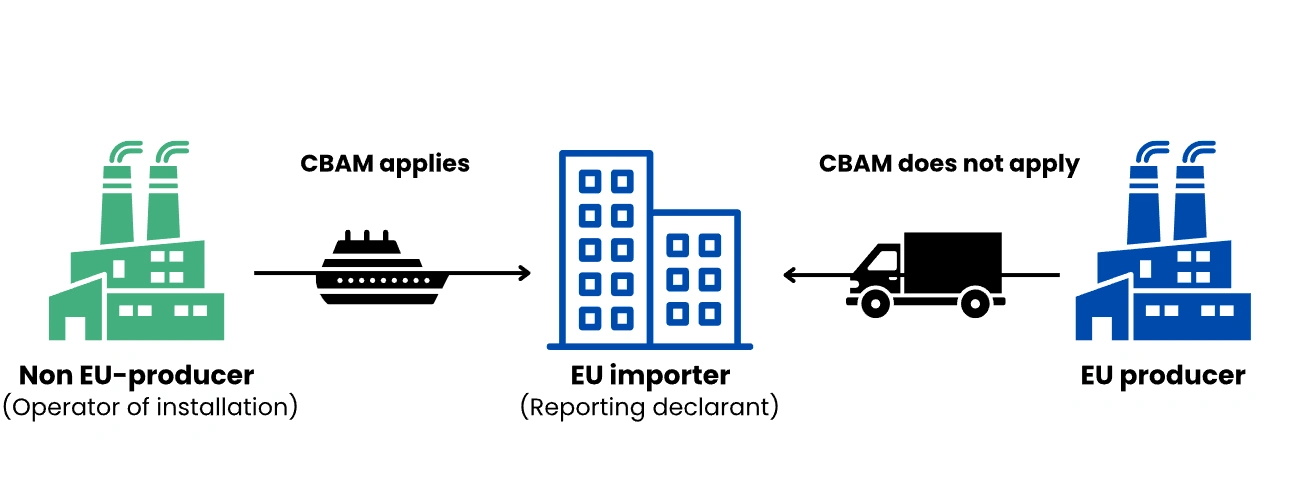
The Carbon Border Adjustment Mechanism (CBAM) is the European Union’s carbon border policy designed to address emissions associated with imported goods. It ensures that products entering the EU face a similar carbon price as goods produced within the EU under the EU Emissions Trading System (EU ETS).
By applying a carbon cost to certain imports, CBAM aims to prevent carbon leakage, maintain fair competition for EU industries, and encourage lower-carbon production globally.

sentra.world is Ministry of Commerce EEPC official appointed consultant for CBAM
We are recognised as the official CBAM consultant for exporters by EEPC India under the Ministry of Commerce, supporting Indian manufacturers and exporters with structured, EU-aligned CBAM compliance and automated reporting.
We are #1 carbon emissions consultancy for metals and engineering producers, offering a digital platform with 40+ CBAM Solutions specialists
EU CBAM Timeline : Are You Prepared?
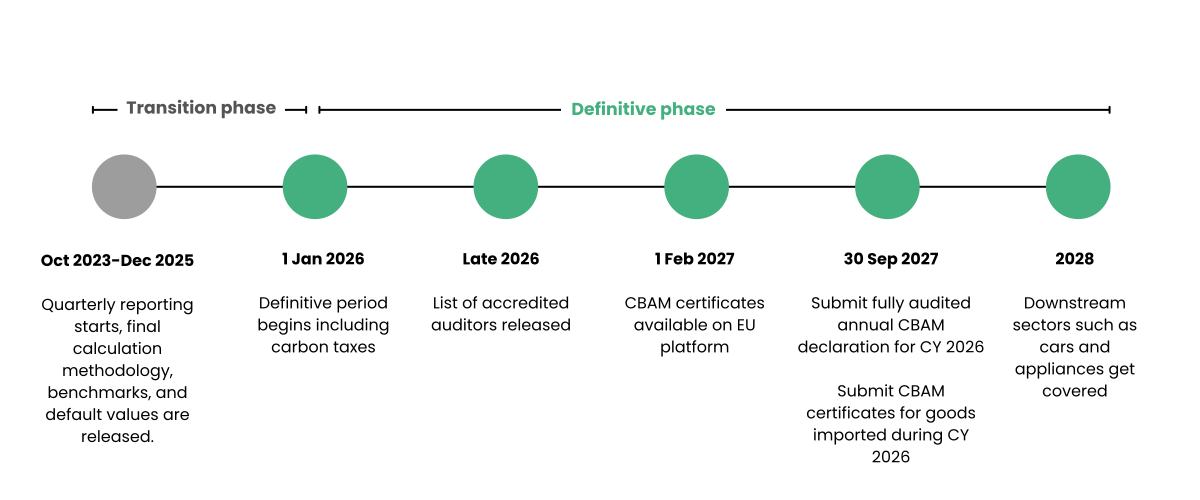
The EU Carbon Border Adjustment Mechanism (CBAM) is being introduced in stages, starting with the transition phase (2023–2025) focuses on emissions reporting, while the definitive phase from 2026 onwards brings actual CBAM costs and payments for EU-bound exports.
CBAM Reporting and Consultancy for Covered sectors
The EU Carbon Border Adjustment Mechanism (CBAM) currently applies to several carbon-intensive sectors, including Iron & Steel (CN codes family of 72, selected 73 and downstream items), Aluminium (CN code family of 76), Fertilisers (2808, 2814, 2834, 3102, 3105), Cement (2507, 2523), Electricity (2716 00 00), and Hydrogen (2804 10 00). Companies importing these products must meet CBAM reporting requirements and disclose the embedded emissions associated with their goods.

Iron & Steel

Aluminum

Cement

Electricity

Fertilizers

Hydrogen
Enter your product details to calculate your CBAM liability.
- Verified Supplier Data Becomes Essential
- New EU Benchmark Values
- CBAM Costs Begin
From 1 January 2026, importers must purchase CBAM certificates covering emissions above benchmark levels.
Certificate prices are linked to the EU ETS carbon market.
- CBAM Registry Becomes the Compliance Hub
What changes in 2026?

Verified Supplier Data Becomes Essential
Actual emissions data must be verified by an accredited third-party auditor. Without verification, importers must rely on default emission values, which are typically higher.

New EU Benchmark Values
The EU has introduced product-specific benchmark emissions values based on CN codes and production routes. If supplier data is unavailable, country-level default benchmarks apply, increasing CBAM exposure.

CBAM Costs Begin
From 1 January 2026, importers must purchase CBAM certificates covering emissions above benchmark levels.
Certificate prices are linked to the EU ETS carbon market.

CBAM Registry Becomes the Compliance Hub
The EU CBAM Registry will manage emissions of reporting and certificate purchases. While declarations become annual, companies will still track emissions quarterly for cost forecasting.
Calculate your CBAM costs
Calculate your CBAM costs
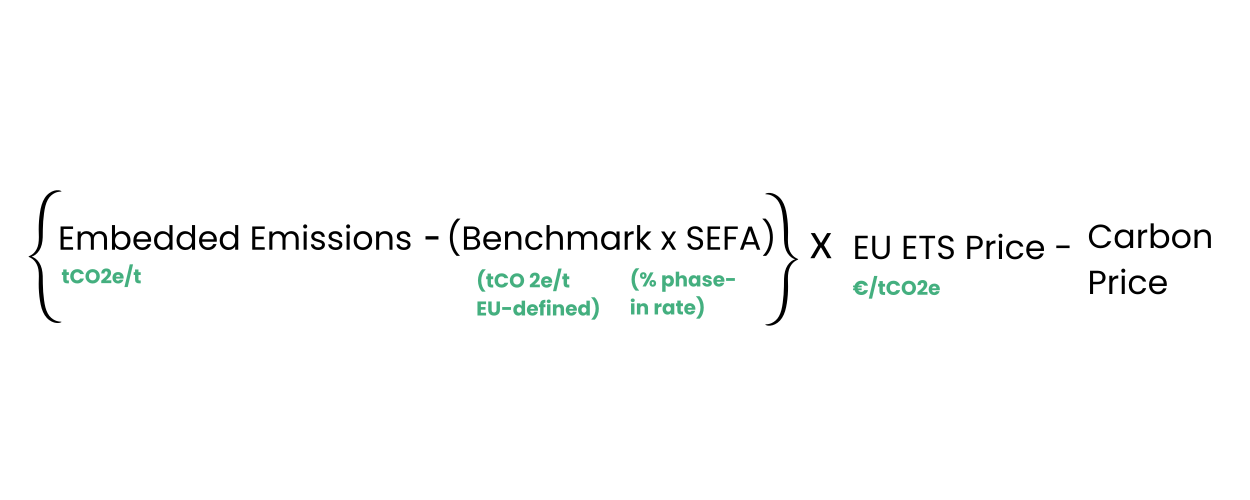
What Each Part of the Formula Means:
Embedded Emissions– The direct greenhouse gas emissions generated during the production of the exported product. These emissions are calculated according to EU CBAM methodology
SEFA (Specific Embedded Free Allocation)– SEFA adjusts emissions using the EU benchmark and phase-in factor, reflecting the gradual removal of free EU ETS allowances between 2026 and 2034.
SEFA is calculated using:
- Specific mass of precursor materials
- EU benchmark emissions
- CBAM phase-in factor
- Cross-sectoral correction factor
CBAM Certificate Price – The CBAM certificate price is linked to the EU Emissions Trading System (EU ETS) and reflects the carbon market price in the EU.
Importers must purchase certificates equivalent to the emissions subject to CBAM.
Carbon Price Already Paid – If a carbon price has already been paid in the exporting country (for example under national carbon pricing systems like India’s CCTS), it can be deducted to avoid double carbon pricing.
The result determines the CBAM cost per tonne of imported goods, which EU importers must pay through CBAM certificates.
Calculate your CBAM costs
What Each Part of the Formula Means:
What Each Part of the Formula Means
Embedded Emissions
SEFA (Specific Embedded Free Allocation)
SEFA adjusts emissions using the EU benchmark and phase-in factor, reflecting the gradual removal of free EU ETS allowances between 2026 and 2034.
SEFA is calculated using:
- Specific mass of precursor materials
- EU benchmark emissions
- CBAM phase-in factor
- Cross-sectoral correction factor
CBAM Certificate Price
The CBAM certificate price is linked to the EU Emissions Trading System (EU ETS) and reflects the carbon market price in the EU.
Importers must purchase certificates equivalent to the emissions subject to CBAM.
Carbon Price Already Paid
If a carbon price has already been paid in the exporting country (for example under national carbon pricing systems like India’s CCTS), it can be deducted to avoid double carbon pricing.
The result determines the CBAM cost per tonne of imported goods, which EU importers must pay through CBAM certificates.
Just enter your CN Code to check.
How Should Exporters Prepare for CBAM?
Identify EU Exposure
Confirm whether your products are exported directly or indirectly to the EU and whether they fall within CBAM-covered sectors and CN codes.
Define Production Routes
Map the installations, processes, and production routes used to manufacture CBAM goods.
Establish Monitoring Systems
Develop a CBAM-aligned monitoring methodology for emissions, data collection, and reporting.
Track Product-Level Emissions
Collect activity data and emissions factors across the full production chain, including precursor materials and upstream suppliers.
Assess Future CBAM Costs
Model how emissions intensity, EU benchmarks, and CBAM certificate prices may impact product costs from 2026 onwards.
Verify and Share Emissions Data
Undergo third-party verification and provide verified emissions data to EU customers for CBAM reporting.
How sentra.world helps?
Comprehensive Emissions Calculation
Product-level emissions calculation aligned with EU CBAM methodology across all applicable CN codes.
EU-Ready CBAM Reporting
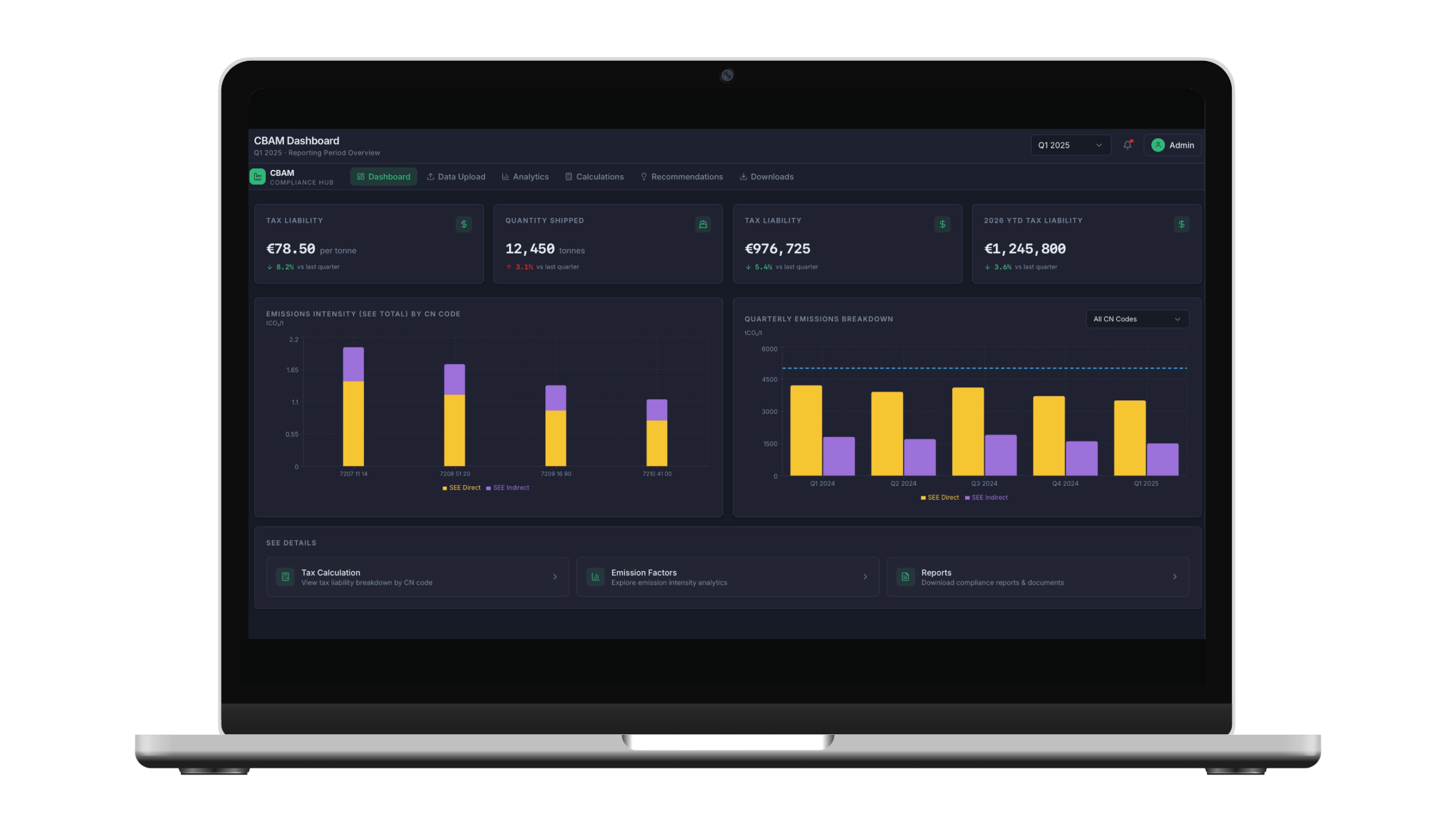
Quarterly detailed CBAM reports with analytics and exporter-ready documentation.
Coverage Across All CN Codes
Reporting support for all applicable CBAM sectors including steel, aluminium, cement, fertilisers, electricity, and hydrogen.
Audit & Verification Readiness
Preparation of Annexure IV reports, documentation, and audit-ready datasets for third-party verification.
O3CI Portal Reporting Support
Guidance for CBAM registry and O3CI portal submission, including compliant XML and Excel reporting formats.
CBAM Cost & Carbon Tax Forecasting
Estimate CBAM liability based on EU ETS carbon prices and forecast carbon costs from 2026 to 2034.
Leading CBAM Consultancy for Exporters and Manufacturers















































Frequently Asked Questions

CBAM is a carbon pricing system introduced by the EU to impose fees on carbon-intensive goods imported into the EU, aiming to level the playing field between EU-produced and imported goods by accounting for carbon emissions.
CBAM aims to prevent carbon leakage, where companies relocate production to countries with less stringent climate policies. It promotes equal competition and encourages global adoption of carbon pricing to reduce greenhouse gas emissions.
CBAM impacts EU importers of covered goods (iron, steel, aluminium, cement, electricity, fertilisers), non-EU producers exporting to the EU, and EU companies using these imports. Costs and reporting requirements will vary based on their role in the supply chain.
While the ETS sets caps on greenhouse gas emissions for EU companies, CBAM imposes a carbon price on imports to ensure that imported goods face similar costs. This helps prevent competitive disadvantages for EU manufacturers adhering to stringent environmental standards.
Initially, CBAM covers imports of iron, steel, aluminium, electricity, certain fertilisers, and cement. The scope may expand to include plastics, chemicals, and all sectors covered by the EU ETS by 2030.
To calculate CBAM emissions, follow these steps:
1. Determine which imported goods are covered under CBAM (e.g., steel, cement, aluminium, fertilizers, hydrogen, electricity).
2. Use primary data from suppliers for the most accurate emissions reporting. If primary data is unavailable, use default emission factors provided by the European Commission or regional factors.
3. Calculate emissions using the formula: Emissions = Weight of goods (tonnes) × Emission factor (emissions per tonne). During the transitional period, default values can be used until July 2024.
sentra.world simplifies this process with advanced tools that ensure accurate, compliant, and efficient CBAM reporting.
CBAM’s transitional phase began in October 2023 with reporting requirements. Full implementation, including payment obligations, will start in January 2026, aligning with the phase-out of free ETS allowances for EU producers.
CBAM will affect trade dynamics by imposing carbon costs on imports, potentially leading to new trade agreements and increased adoption of carbon pricing globally. It aims to reduce carbon emissions through Scope 1, Scope 2 and Scope 3, and encourage greener supply chains.
CBAM makes imports into the EU pay roughly the same carbon cost as goods made inside Europe. Rolled out in phases since 2023, it turns into a real financial charge from January 2026 for steel, cement, aluminium and fertilisers.
Sentra is EEPC-appointed as an official CBAM consultant for Indian exporters. That covers emissions calculations by EU methodology, quarterly filings, O3CI registry submissions, and forecasting certificate costs through 2034.
Live Webinar: The CBAM Impact
CBAM becomes mandatory from January 2026 and exports to the EU must be prepared. Join this industry-led speakers discussing the Carbon Border Adjustment Scheme (CBAM) and its real impact on exporters, particularly across steel and carbon-intensive value chain. As CBAM moves from reporting to financial liabilities, exporters face direct carbon tax exposure, audit requirements, and higher costs if emissions data is not calculated and reported correctly.
Latest Blogs
The initial phase of the Carbon Border Adjustment Mechanism (CBAM) was more flexible. Reports could be filed with default values, estimates had fewer
CBAM for engineering exporters is not a future issue, it is an active compliance obligation with consequences already accumulating. Many exporters assume the
The Carbon Border Adjustment Mechanism (CBAM) has transformed from a mere reporting requirement into a major financial obligation. SEFA now plays a crucial
Just enter your CN Code to check.
