
If you’re in the manufacturing sector, you’ve likely noticed the growing importance of ESG reporting and ESG compliance. The competitive landscape within the industry has shifted significantly. For manufacturers, the question is no longer whether to engage in ESG reporting but rather how to ensure the data’s credibility to satisfy buyers, secure essential loans, or win export contracts.
ESG compliance for manufacturing has moved beyond being a temporary trend; it has become a fundamental operational necessity. Globally, sustainability disclosure is becoming more formalised. IFRS S1 and IFRS S2 are effective for annual reporting periods beginning on or after 1 January 2024, setting a common baseline for sustainability-related financial and climate-related disclosures.
“Data transparency is not just a luxury; for manufacturers, it offers a vital competitive edge.”
Before delving into specifics, let’s clarify a common misconception: the distinction between ESG as a guiding philosophy and specific reporting frameworks.
ESG Reporting: Understanding the Framework
Misunderstanding these terms can lead to costly errors for manufacturers.
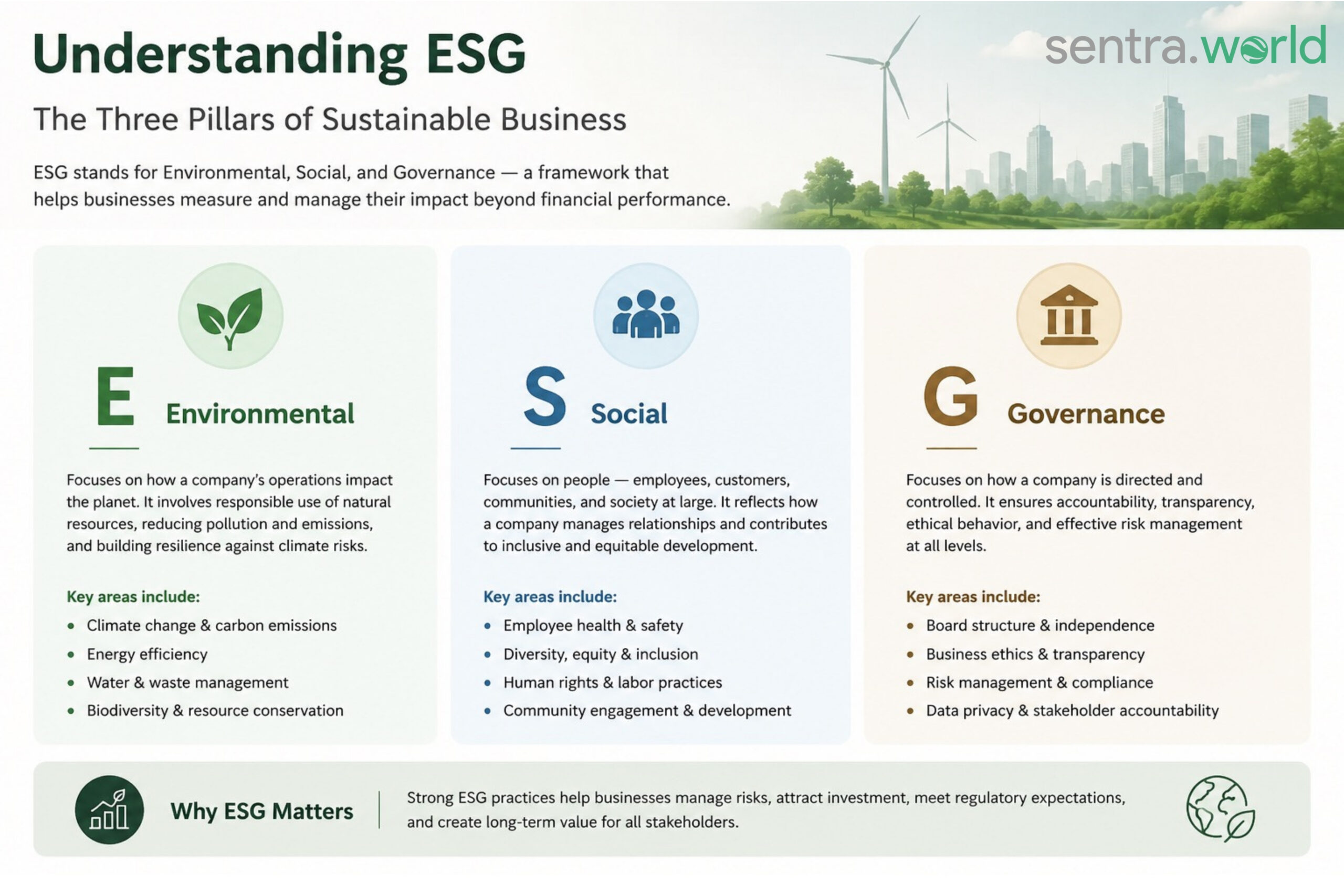
ESG (Environmental, Social, and Governance) serves as a guiding principle for investors, buyers, and stakeholders assessing a company’s long-term sustainability. It covers a wide range of considerations that businesses must address to meet environmental and social responsibilities.
For companies, aligning with ESG principles not only satisfies regulatory requirements but also enhances credibility with international procurement teams prioritizing transparency and ESG alignment.
Investing in customized ESG compliance software for manufacturing can streamline the alignment of operational data with global standards, minimizing redundant efforts.
Understanding these distinctions prepares companies for impending regulatory deadlines. Ready or not, these changes are on the horizon.
The 2025 Deadline: Global Value Chain Mandate
Having covered what ESG reporting entails, let’s discuss its impact, likely affecting a broader group than many business owners anticipate.
The global shift towards comprehensive ESG reporting now requires companies to disclose sustainability data throughout their value chains. This involves collecting and sharing data from key partners, significantly affecting smaller suppliers.
The 2% rule is significant for manufacturers. If your company accounts for 2% or more of a larger company’s purchases or sales by value, you’re part of their reportable value chain. For those supplying components or collaborating with major infrastructure or automotive clients, reaching this threshold is more common than you might think.
In practice, this means major buyers will soon request verified ESG and emissions data to complete their regulatory disclosures. Analysis shows that value chain emissions reporting remains a challenging area for many supply chains.
This is where AI carbon accounting for industrial firms becomes invaluable, enabling manufacturers to automate data collection processes that manual methods struggle to manage on a larger scale.
The Scope 3 Measurement Challenge
Understanding who needs to comply is one aspect. Determining what needs to be measured is where many manufacturers face challenges.
According to CDP and BCG, companies reported in 2023 that their Scope 3 supply-chain emissions were, on average, 26 times higher than their direct operational emissions. For producers, the real story begins at the source, including suppliers and logistics. Focusing solely on direct energy consumption fails to provide a complete picture, potentially displeasing regulators.
Collecting this data is challenging and costly. Obtaining audit-ready emissions data from upstream suppliers is notoriously difficult. Many smaller vendors don’t track emissions, and manufacturers often resort to reverse-engineering carbon data from financial figures, a method that lacks reliability under independent verification. Analysis highlights this capacity gap, pointing out that supplier-level data quality is the primary hurdle to credible disclosure.
This is altering procurement practices. Audit-ready Scope 3 data is becoming essential for suppliers. Companies are shifting from cost-based to risk-adjusted sourcing, where a vendor’s ability to provide verified emissions data determines their approval status.
The complexity is significant, making ESG data management platform solutions designed for manufacturing environments increasingly crucial.
Leveraging AI Carbon Accounting for ESG Reporting Success
Having identified the Scope 3 measurement gap, let’s explore the tools that can bridge it. For most manufacturers, the solution begins with understanding what doesn’t work.
Why Spreadsheets Are Insufficient for ESG Reporting Audits
Spreadsheets remain a common tool for many small manufacturers, but they pose significant risks under regulatory scrutiny. Formulas can malfunction, version control is challenging, and tracking data lineage is problematic. When an auditor inquires about a Scope 3 figure, referencing “column K of Tab 7” is inadequate. The World Economic Forum’s AI Playbook emphasizes that AI-driven automation can significantly reduce data-processing errors, which is crucial for emissions reporting integrity.
What Effective ESG Reporting Software Offers
For manufacturers, the right software should manage Scope 3 emissions tracking across the supply chain, not just internal energy usage. Key features include:
- Automated supplier data ingestion via APIs or structured templates
- Sector-specific emission factors aligned with production benchmarks
- Audit-ready data trails with timestamped source documentation
- ESG-mapped reporting outputs that align with global disclosure formats
The right platform does more than store data, it creates a defensible evidentiary chain under regulatory review.
Strategic Roadmap: From ESG Compliance to Global Competitiveness
ESG compliance need not be merely a regulatory hurdle. For manufacturers, it can serve as a springboard for global market access if approached strategically.
Step 1: Conduct a gap analysis of current ESG data. Before investing in tools, compare your existing data against ESG disclosure requirements. Identify Scope 3 data gaps, manual process inaccuracies, and supplier relationships needing formal emissions documentation. This baseline indicates your compliance distance.
Step 2: Implement automated Scope 3 tracking tools. As discussed, AI-driven platforms can replace spreadsheet guesswork with audit-ready emissions data. Structured ESG reporting at scale is a benchmark smaller manufacturers can aspire to.
Step 3: Use your ESG report as a marketing asset. A verified ESG disclosure is valuable in global RFPs, where buyers increasingly evaluate suppliers on ESG credentials. Properly positioned compliance documentation transforms into a competitive edge-not just a filing obligation.
Leading manufacturers will set the standard. Begin your gap analysis today.
How sentra.world Helps in ESG Reporting?
Feeling overwhelmed with ESG reporting and unsure where to start?
sentra.world is here to guide you. Our platform simplifies ESG compliance by providing tools for automated data collection, ensuring your reports are audit-ready.
We streamline the process, allowing you to focus on strategic growth while meeting regulatory demands effortlessly. Reach Out!
For more information on ESG, visit our page: https://sentra.world/esg-reporting/