
In 2025, Oman experienced a notable shift as sustainability reporting transitioned from being voluntary to a mandatory requirement for all companies listed on the Muscat Stock Exchange (MSX). This crucial change highlights the dedication of Omani businesses to transparency and accountability in their environmental, social, and governance (ESG) practices.
The MSX’s mandatory ESG framework obliges listed companies to provide ESG reports detailing their activities for the 2024 fiscal year. Compliance with this mandate is imperative, with strict deadlines ensuring timelysubmissions.
📅 Key Deadline: March 31st each year -all MSX-listed companies must submit a standalone ESG report for the preceding fiscal year. Missing this deadline indicates non-compliance and has repercussions for both investors and regulators.
This regulatory development aligns with Oman Vision 2040 and the National Net Zero Strategy by 2050, embedding sustainability into the nation’s long-term economic framework. Eng Salim Nasser al Aufi, Minister of Energy and Minerals, emphasizes this transition to mandatory reporting as a strategic step toward cultivating a resilient, sustainable, and low-carbon economy.
The shift marks a transition from qualitative to quantitative measures: polished CSR storytelling is being supplanted by quantifiable ESG data -figures that are measurable, comparable, and auditable, offering a true reflection of performance rather than mere narratives.
The sections below explore the essence of sustainability reports, the data companies must gather, distinctions between ESG and sustainability reporting, the interplay between MSX ESG disclosures and broader sustainability initiatives, and the critical role of evidence-based reporting.
Understanding Sustainability Reports
Sustainability reporting involves detailing how a company manages its environmental, social, and governance (ESG) responsibilities. These reports require specific data reflecting a company’s impact and performance in these areas. Let’s examine the key components:
- Environmental Data: This includes metrics on energy consumption, greenhouse gas (GHG) emissions, water usage, and waste management. Companies must provide verified, traceable data that can withstand external audits.
- Social Responsibility: Information on labor practices, community engagement, and corporate social responsibility initiatives falls under this category. Metrics here might include employee diversity statistics, community investment amounts, and health and safety records.
- Governance Practices: This involves disclosing corporate governance structures, board diversity, executive compensation, and compliance with ethical standards.

Essential Data Requirements for Companies
Meeting sustainability reporting obligations requires companies to establish comprehensive data collection mechanisms. This involves several critical steps:
- Automating Data Collection: Implementing IoT-connected sensors for real-time tracking of environmental metrics like energy and water use enhances accuracy and efficiency.
- Integrating Scope 3 Emissions: Engaging suppliers to report indirect emissions that occur throughout the value chain is crucial, as these often constitute the majority of a company’s carbon footprint.
- Aligning with Global Standards: Adhering to frameworks like the Global Reporting Initiative (GRI) ensures reports are standardized and internationally comparable.
sentra.world helps companies centralise ESG, emissions and supplier data through automated data collection, validation workflows and audit-ready dashboards, reducing dependence on scattered spreadsheets and manual reporting.
ESG Reporting vs. Sustainability Reporting
While often used interchangeably, ESG reporting and sustainability reporting have distinct focuses. ESG reporting is primarily geared towards investors and regulators, concentrating on compliance, transparency, and risk management through specific metrics. It serves as a tool for assessing a company’s operations in terms of environmental, social, and governance criteria. Conversely, sustainability reporting encompasses a broader scope, aiming to guide a company’s long-term strategic improvements in operations and resource management. It addresses how a company sustains its business and contributes positively to society and the environment over time.
In practical terms, ESG reporting answers the question: “What must we disclose?” Sustainability reporting answers: “How are we improving as a business?” Both are connected, but they are not the same. Strong ESG reporting creates the data foundation, while sustainability reporting turns that data into a long-term business improvement story.
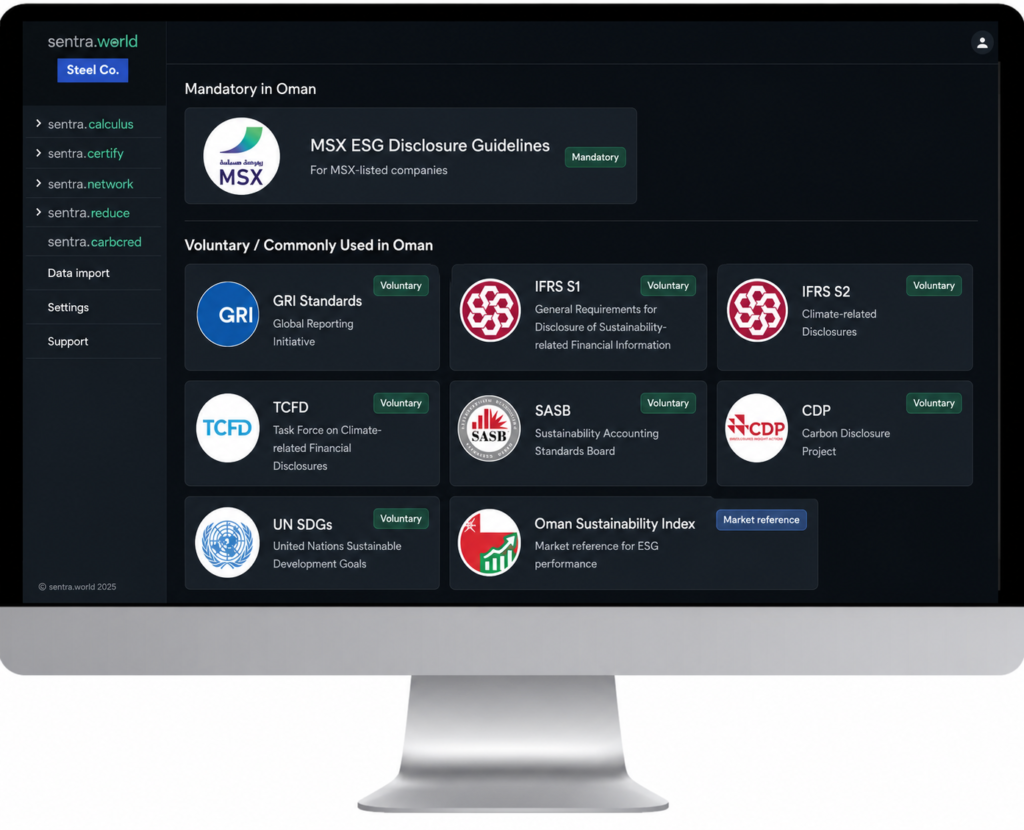
The Role & Integration of MSX ESG Disclosures in Broader Sustainability Efforts
The MSX ESG Disclosure Guidelines mandate reporting on 30 specific metrics, establishing a standardized language for capital markets. These disclosures primarily serve investors and regulators, focusing on scores and transparency. However, their influence extends beyond compliance.
In contrast, broader sustainability reporting serves an operational purpose, guiding how a company manages resources and processes to ensure long-term viability. While ESG focuses on compliance and investor relations, sustainability reporting is strategically improved in operations.
sentra.world supports this transition by helping companies map ESG data to reporting frameworks, maintain supporting evidence and convert disclosure requirements into structured sustainability performance tracking.
MSX ESG disclosures serve as a foundational element in the broader context of sustainability reporting by establishing a baseline of transparency and accountability. These disclosures ensure that key ESG metrics are consistently reported, which supports the broader goals of sustainability reporting by providing a clear picture of a company’s environmental and social impact. The integration of MSX ESG disclosures into broader sustainability efforts helps companies align their operations with global sustainability goals, ensuring that their strategies contribute to long-term environmental stewardship and social responsibility.
The Importance of Evidence-Based Sustainability Reporting
Evidence-based reporting is crucial as it underpins the credibility and utility of sustainability reports. Verified data is not just about compliance; it is a strategic asset:
- Investor Confidence: High-quality, verified data enhances a company’s attractiveness to investors by reducing perceived risk.
- Regulatory Compliance: Meeting regulatory standards with evidence-based reporting avoids penalties and enhances market access.
- Strategic Advantage: Companies with robust data infrastructure can convert compliance efforts into competitive advantages, such as accessing green financing and carbon credits.
This is where sentra.world can help. The platform enables companies to maintain source-level evidence, calculation notes, approvals, emission factors and audit trails in one digital system, making sustainability reports easier to review, verify and defend.
Preparing for the 2025 Reporting Cycle: Strategic Steps
Sustainability reporting in Oman has become a structured obligation with significant financial implications. As MSX disclosures are due by March 31st each year, companies must ensure their data infrastructure is ready. Key steps include:
- Confirming Reporting Obligations: Ensure compliance with MSX filing requirements to avoid regulatory risks.
- Auditing Data Systems: Prepare for third-party scrutiny by ensuring GHG metering and data sources are audit-ready.
- Aligning Standards: Harmonize MSX disclosures with international frameworks to minimize duplication and maximize credibility.
- Leveraging Disclosures: Use sustainability data as a financial tool to unlock green financing and preferential trade terms.
The transition to high-quality, evidence-based sustainability reporting will position Omani companies to thrive in a landscape increasingly defined by transparency and accountability. By embracing these changes, businesses can not only comply with regulations but also leverage them as opportunities for growth and innovation.
sentra.world: Your Partner in Sustainability Reporting
sentra.world provides comprehensive solutions for Omani companies navigating the complexities of sustainability reporting and ESG Reporting. By offering advanced tools and expert guidance, sentra.world helps businesses align with global ESG standards and enhance data accuracy and transparency. This partnership empowers companies to not only meet regulatory requirements but to transform sustainability reporting into a strategic advantage, driving growth and innovation in a responsible manner.
Want to make ESG Reporting Easy? Reach out to Us!