
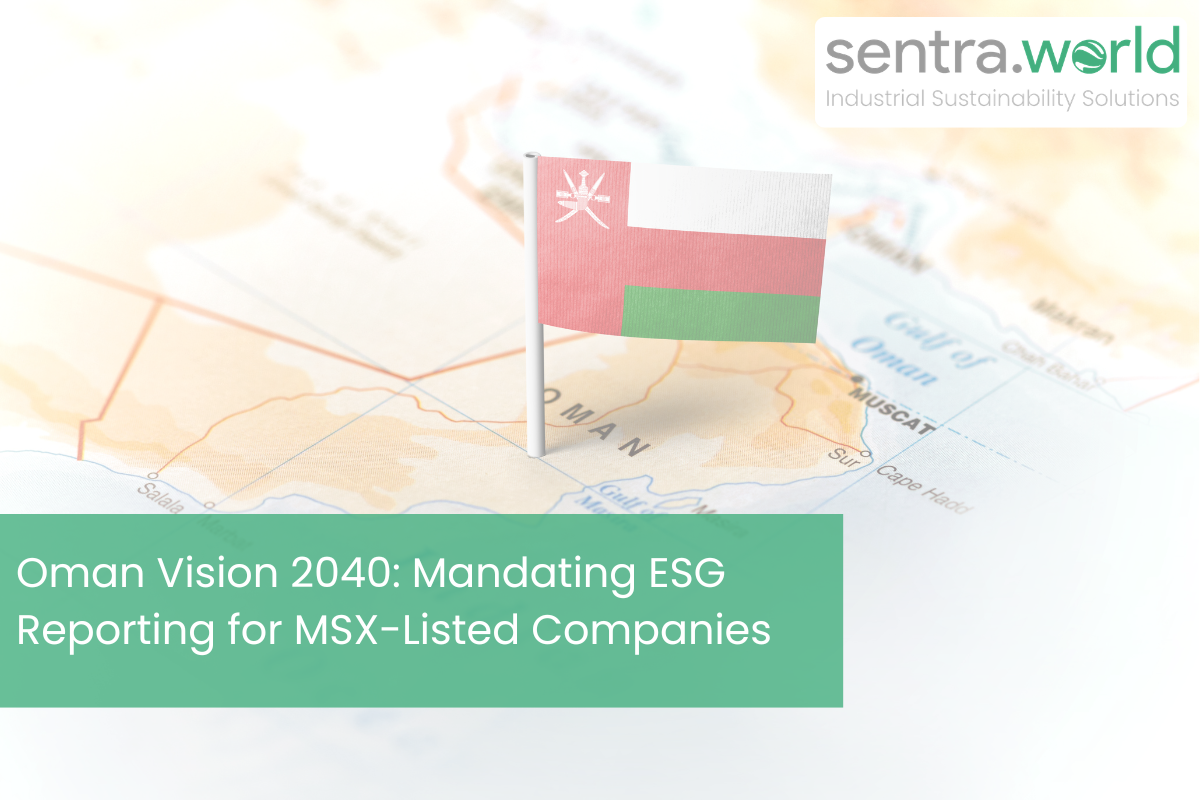
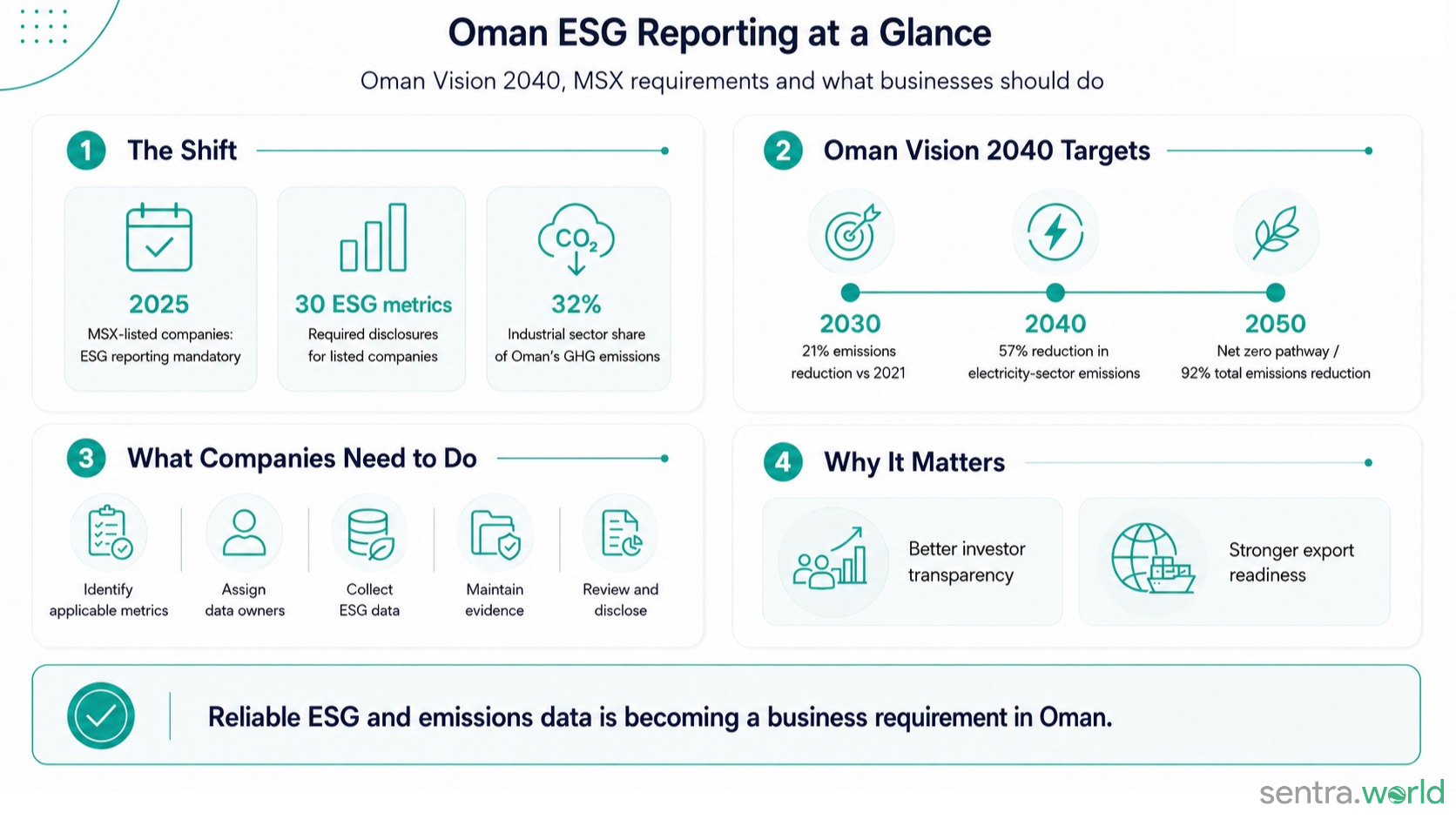
Oman’s commitment to sustainability is stronger than ever. In 2025, the Muscat Stock Exchange mandated that all listed companies report on Environmental, Social, and Governance (ESG) metrics. This transition from a previously voluntary framework aims to enhance accountability and transparency. For companies in oil and gas, logistics, manufacturing, finance, chemicals, industrial services and construction are required to disclose data across 30 specific ESG metrics, with a particular emphasis on greenhouse gas emissions.
Why implement these changes? They are a crucial element of Oman Vision 2040, a strategic framework with ambitious sustainability goals that demand significant changes in industrial practices. Oman Vision 2040 acts as the national blueprint behind this shift. It sets the direction for a more diversified, transparent, and sustainable economy, where businesses are expected to contribute to long-term environmental and social goals. In this context, MSX ESG reporting is not just a compliance requirement for listed companies; it is a practical way to translate Oman’s national sustainability priorities into measurable corporate disclosures. The industrial sector is the largest contributor to Oman’s carbon emissions, accounting for 32% . Thus, requiring these companies to report their emissions is vital for effective climate action.
For businesses, shifting from voluntary to mandatory ESG reporting represents a substantial change. Oman Vision 2040 establishes stringent emissions reduction targets, with specific industrial milestones set for 2030 and 2040, underscoring the challenges ahead. To comply with MSX ESG reporting expectations, companies need to:
- identify which ESG metrics apply
- assign data owners across departments
- collect environmental, social and governance data
- maintain source documents and evidence
- review data quality before disclosure
- publish sustainability information in a structured format
- improve year-on-year reporting consistency
Oman Vision 2040: The ‘Orderly Transition’ with 2030 and 2040 Industrial Milestones
Oman’s carbon emissions reduction strategy includes clear, progressive targets for industries. The Oman Ministry of Energy and Minerals has introduced an ‘Orderly Transition’ plan. By 2030, industries must 21% . Although this target does not appear too modest, it is a crucial step towards compliance with the Muscat Stock Exchange’s ESG regulations.
These targets become more ambitious over time. By 2040, industries are required to achieve a 57% in the electricity industry from the 2021 baseline. This requires a comprehensive reassessment of energy use, production processes, and supply chains.
To reach net zero by 2050, Oman must achieve a 92% . Without starting to measure emissions now, meeting the 2040 deadline would be nearly impossible. Understanding how specific reporting frameworks translate targets into actionable steps is essential.
These objectives extend beyond Oman, impacting how Omani industries compete globally.
Trade Implications and Carbon as a Competitive Variable
Carbon considerations have become crucial for businesses. For Omani exporters in industries like steel, this shift is both vital and quickly evolving. The EU’s Carbon Border Adjustment Mechanism targets emissions in products entering Europe. As a result, companies lacking comprehensive emissions data could face trade barriers. Understanding these regulations is not just advantageous; it’s essential for export-dependent businesses.
Sustainability experts emphasize that “carbon content is becoming a trade factor… Companies unable to provide accurate emissions data risk losing market access.” For sectors such as metals, chemicals, and construction materials, which are central to Oman Vision 2040, this could directly impact revenue.
The message is clear: Measure, Mitigate, Monetize. Companies that begin tracking emissions now can transform compliance costs into a competitive advantage. Those who delay may find it challenging to keep up.
The Role of Technology in ESG Reporting
The move to mandatory ESG reporting requires robust technological solutions. Companies must invest in advanced tools and software for precise emissions measurement and reporting. Technology plays a pivotal role in streamlining data collection, analysis, and reporting processes. By leveraging digital platforms, businesses can ensure transparency and accuracy in their ESG disclosures.
Furthermore, technology can identify areas for improvement, helping companies implement more sustainable practices. As the demand for ESG transparency grows, investing in the right technological infrastructure will be crucial to meet regulatory requirements and gain a competitive edge. This is where ESG reporting tools and services for enterprises like sentra.world become important, helping companies move from scattered sustainability data to structured, traceable ESG disclosures.
Oman Vision 2040: The Path Forward to a Sustainable Future
As Oman continues this transformative journey, collaboration between government, industry, and technology providers is essential. Companies must embrace change and prioritize sustainability to align with national goals. By adopting sustainable practices and investing in ESG reporting, businesses can contribute to a greener future while enhancing their market position.
Additionally, organizations like sentra.world offer tools and expertise to assist companies in accurately tracking and reporting their emissions. For those aiming to stay ahead, these resources can provide a competitive advantage in a rapidly evolving landscape. Embracing ESG reporting not only fulfills regulatory obligations but also positions companies as leaders in environmental stewardship. sentra.world’s ESG data management platform helps companies centralise emissions, energy, water, waste, workforce, governance and supplier data in one auditable system.
In conclusion, Oman’s mandate for ESG reporting is a pivotal step towards achieving the sustainability objectives outlined in Oman Vision 2040. As industries adapt to these new requirements, they have the opportunity to drive positive change and secure a sustainable future for the nation.